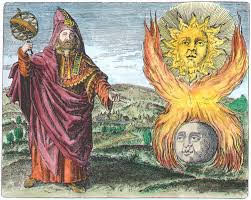
TAOIST PRACTICAL MYSTICISM: Chuang Tzu

When someone is born in this body, doesn’t life continue until death?

Either in conflict with others or in harmony with them,

we go through life like a runaway horse, unable to stop.

Working hard until the end of his life,

unable to appreciate any achievement,

worn out and incapable of resting,

isn’t he a pathetic sight?

He may say, ‘I’m still alive,’ but so what?

When the body rots, so does the mind – is this not tragic?

Is this not ridiculous, or is it just me that is ridiculous and everyone else is sane?

If you allow your mind to guide you,

who then can be seen as being without a teacher?

But if you ignore your mind but insist you know right from wrong, you are like the saying,

‘Today I set off for Yueh and arrived yesterday.’

This is to claim that what is not, is;

That what is not, does exist

why, even the holy sage Yu cannot understand this,

let alone poor old me!

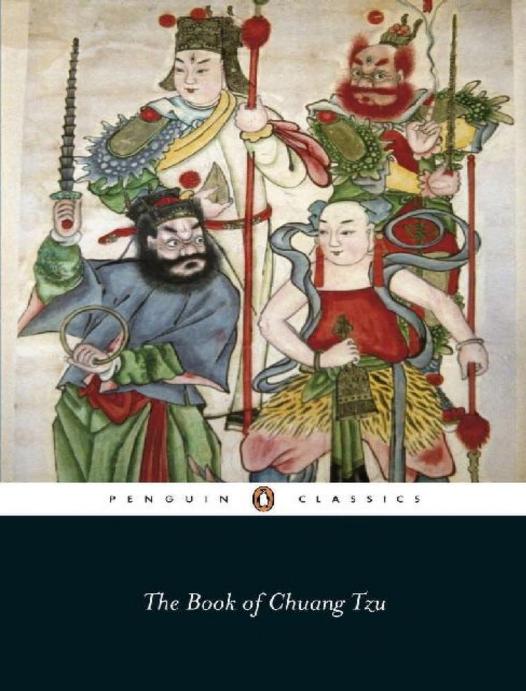
I’ve been downloading and reading through the Ancient Taoist book called by the author’s name, Chuang Tzu, sometimes called the ZHUANGZI–Anglicized Chinese words become essentially guesswork. (It’s complicated.) At Harvard, the had us reading the most famous book to Westerners: Lao Tzu’s TAO TE CHING. But Grandmaster Chen Zhonghua, who essentially embodies the tradition of Chen Practical Method Taiji, told me differently.

The TAO TE CHING is “Philosophical Taoism.” Chuang Tzu is Taoism. It is irreverent and funny stories; it is deep and paradoxical Philosophy; it is poetry; AND it is Alchemy.

Westerners do not understand ALCHEMY: ALCHEMY is Spiritual Transformation. We (they) think of Alchemy as “pseudo-science;” a fake prequel to Chemistry. It is not. We (they) think Alchemists tried to manufacture gold cheaply by using furnaces in a lab. They did not. Some believe that Alchemists tried to make the “Elixir of Immortality,” which would grant immortality in the flesh. Maybe.

The traditional academic notion of Taoist Alchemy is that it is folk superstition, degenerated from ideal Philosophical Taoism of TAO TE CHING. We do not agree. Grandmaster Chen, who grew up in Chia and was taught by a genuine Taoist Sage as a child, teaches that the Alchemical Tradition was earlier. That Lao Tzu’s TAO TE CHING is an intellectual abstract of a real, living practice, that goes back hundreds, perhaps thousands of years, perhaps wanders down and into the corridors and caverns of prehistory.

We actually do Taoist Internal Alchemy when we do Chen Zhonghua Practical Method Taiji; I do actual Taoist Internal Alchemy when I do Chen Zhonghua Practical Method Taiji. I call it Chen Zhonghua Taiji, because other schools call themselves Taiji but are not the Authentic Tradition, handed down from the very Family and Village that founded Chen Taiji. GM Chen is the 19 Master in an unbroken chain of masters tracing back to Taiji’s origins.

The line I like best is when it goes, “Is this not ridiculous, or is it just me who is ridiculous and everyone else is sane?”
Philosophy of Religion

For me, today, religion is more a technique than a belief system.  Religion is a set of tools to use to perfect the self.  My interfaith background has led me to this idea, and the practices I have gone through.

When I was young, and I think that this is appropriate for young people, I learned a lot of belief systems.  I had a real delight in ideas, truth, and doctrines.  Now, my concern is how the ideas I have learned work in my reformation process.  From this point of view, religion is the tools I use in this.

I recently experienced Vedanta meditation (philosophical Hindu practice).  Very briefly, very basically.  But having studied Vedanta in graduate school, I had an idea where the teacher was going during the meditation.  I have used the techniques he taught us on my own to good effect.  However, I have certain doctrinal disagreements with the theology behind Vedanta.  My main concern is with the idea of an embodied God.  As a Christian, my God is Jesus.  Yet in Vedanta, the Ultimate is pure Consciousness, Peace, Infinite and impersonal.  I believe that these qualities apply to Jesus–all except the impersonal aspect of the Ultimate.  There are other areas of intersection.  My Swedenborgian beliefs teach that self is ultimately an illusion, as does Vedanta.  The only Self is God, which fits  with Vedanta, if we call God Brahman.  Then I bump up against Jesus as embodied Deity.  These questions are in Hinduism, too, as there is a devotional aspect to Hinduism in the worship of Gods like Shiva, Vishnu, or Shakti.  Devotional Hinduism sometimes criticizes Vedanta, too.  However, when I forget about these doctrinal issues, the meditation works quite well in calming my mind and elevating my consciousness, and relieving my base inclinations.  As a technique, as a tool for reformation, Vedanta works.  Works better than just Swedenborgian rationalism.

In another area of my spirituality, I find certain articulations in Taoism working better, again, than my Swedenborgian rationalism.  Swedenborg has a difficult concept called “proprium.”  Proprium means, basically, self-generated self.  Self-generated feelings and actions are the source of all evil.  Relief from self comes when we are moved by God’s Spirit.  Then, activity flows freely.  Explaining this and understanding it with linear language is difficult and inefficient.  I find that the Taoist metaphors of “the uncarved block,” “the way of water,” “the breath of the valley spirit” work well to illustrate how the Holy Spirit moves self without self-generated deeds.  Also, Taoist paradoxes work well, such as “action without action,” or “effortless doing,” what they call “wu-wei.”

When I was younger, I used to say I was sometimes Buddhist, sometimes Christian, sometimes Hindu, sometimes Jewish, depending on how I felt in the moment.  That was a kind of way of showing off my interfaith education.  Now, however, I find that all those doctrines I learned can help me in my spiritual growth.  I don’t have the arrogance to claim that I really am Buddhist sometimes, for instance.  But sometimes, Buddhism does work better in my life work of spirituality.  But it works as a tool, not as a concept.  So that is now how I view religion: in terms of a tool that will make me better, and of better service to the world I inhabit.

I kind of think that if people did view religion as a tool, and not as an exclusive world-view, there would be more religious harmony in the world; less fighting; better people.  I am aware that many people today don’t have a place in their life for religion.  But maybe that is because too often, religion is thought to be a belief system, and not a tool in the process of reforming the life.  In my experience, religion works!